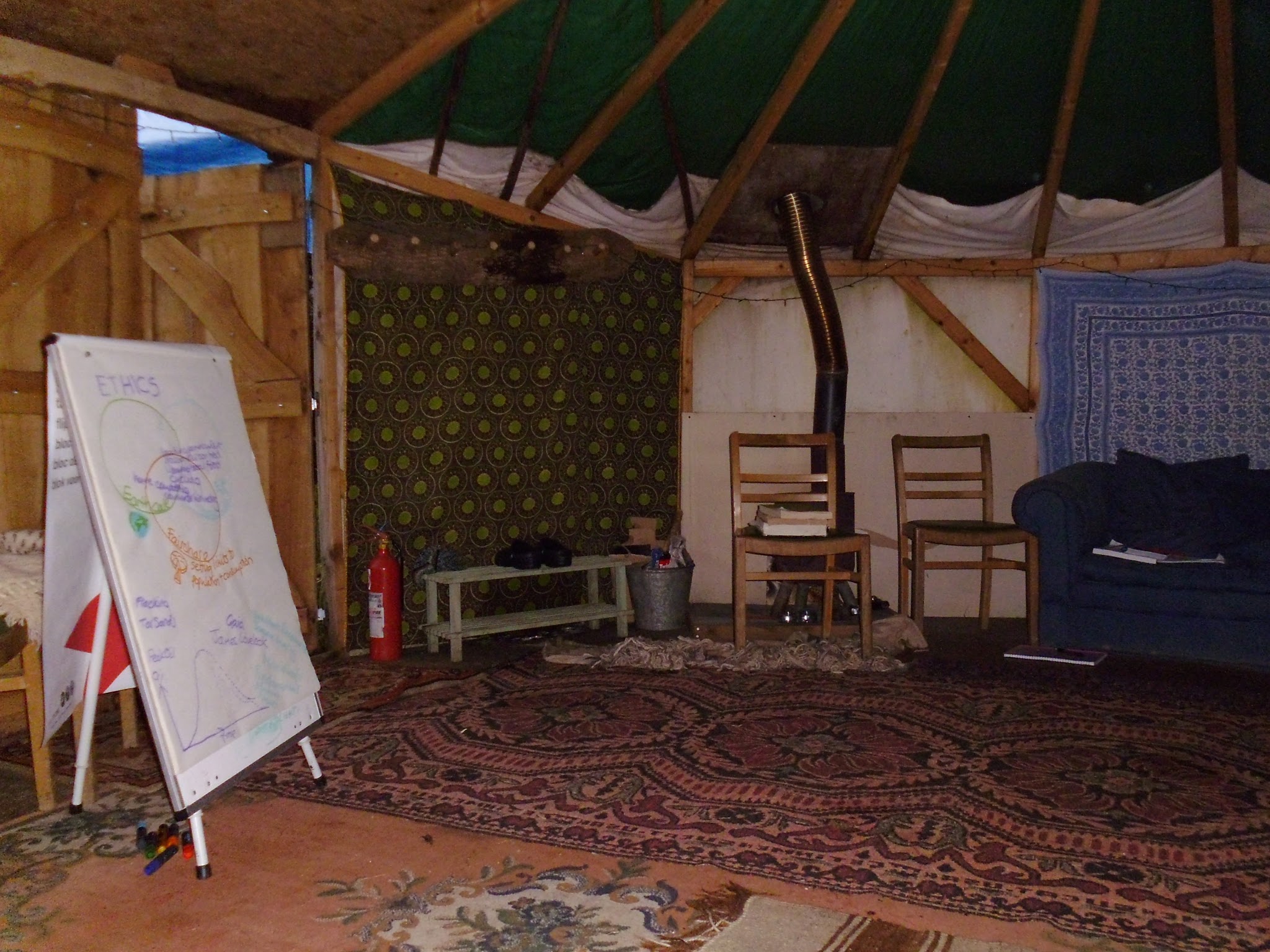
A permaculture design course session. Photo: Wikimedia Commons / CC BY-SA
What permaculture design actually means
The word permaculture, coined by Bill Mollison and David Holmgren in the 1970s, combines permanent and agriculture (or culture). The design system grew from the observation that natural ecosystems maintain themselves without external inputs because their elements are arranged to work together. A forest produces and cycles its own nutrients, manages water, and resists pests without fertilisers or pesticides.
Permaculture design attempts to apply those self-sustaining arrangements to productive human landscapes. This means placing elements — plants, water features, structures, animals — so that the outputs of one become the inputs of another, reducing the need for labour and external resources.
In Poland, this has particular relevance given high fertiliser costs and increasingly erratic rainfall patterns documented by the Institute of Meteorology and Water Management (IMGW).
The zone system
One of the most practical tools in permaculture design is the zone system. It organises a site into concentric zones based on how frequently each area needs attention from the household or farm centre.
Zone 0: the house
The starting point for design. Energy efficiency, water use and food storage within the home are zone 0 considerations.
Zone 1: frequently visited areas
The area immediately around the house, visited multiple times daily. Herbs, salad crops, seedling beds and compost heaps belong here. In a typical Polish townhouse garden, zone 1 might cover the first 5–10 metres from the back door.
Zone 2: regular maintenance
Visited daily or every two days. Main vegetable beds, fruit bushes such as currants and gooseberries, and small fruit trees fit here. Raised beds are often concentrated in zone 2.
Zone 3: occasional attention
Main crops and larger fruit trees. Visited weekly or less. In Poland, this might include apple, pear and plum orchards, or larger plots of potatoes or grain for home use.
Zones 4 and 5
Zone 4 covers semi-wild areas managed for timber, nuts or forage. Zone 5 is left largely unmanaged as a habitat corridor and observation area. Few domestic gardens reach zones 4 or 5, but they matter in farm-scale design.
The zone system is a thinking tool, not a rigid boundary map. Steep slopes, water sources and prevailing winds can all shift where a given element is most efficiently placed.
Sectors: reading what the site brings in
While zones map human activity, sectors map the energies that flow through a site from outside: sun angles, prevailing winds, water flow paths, fire risk, and noise. Sector analysis is done before planting or building anything.
In central Poland, the dominant summer sun comes from the south-east to south-west. Placing tall trees to the north of a garden avoids shading beds. Wind analysis is especially important in the lowland regions where winter north-easterlies can damage fruit trees and dry out seedbeds in spring. A windbreak of native shrubs on the north-east boundary can reduce wind speed across the whole garden.
Stacking functions
Every element in a permaculture design should serve more than one function. An apple tree produces fruit, provides shade, drops leaves that become mulch, and offers habitat for beneficial insects. A pond catches rainwater, creates a microclimate, and can house ducks that manage slug populations in nearby beds.
The design principle is sometimes stated as: each function supported by multiple elements, and each element serving multiple functions. This redundancy builds resilience — if one element fails or is removed, its functions are still met by others.
Guilds and plant relationships
A guild is a group of plants that mutually support each other when grown together. The classic example is the Three Sisters combination — maize, climbing beans and squash — developed by Indigenous agricultural traditions in North America. The beans fix nitrogen, the maize provides a climbing frame, and the squash shades the ground to retain moisture and suppress weeds.
In Polish conditions, a comparable approach might combine a fruit tree with nitrogen-fixing shrubs like sea buckthorn (Hippophaë rhamnoides), dynamic accumulators like comfrey (Symphytum officinale) for biomass, and ground-covering strawberries to protect the soil surface.
Observing before acting
Mollison's original formulation included the principle of prolonged observation before design. Watching how water moves across a site in heavy rain, where the first frosts settle, and which areas dry out fastest in summer provides information that cannot be obtained from a map. In practice, this means spending at least one growing season observing a new site before making major design decisions.
Further reading
- Holmgren, D. (2002). Permaculture: Principles and Pathways Beyond Sustainability. Holmgren Design Services.
- Mollison, B. (1988). Permaculture: A Designers' Manual. Tagari Publications.
- IMGW — Polish Institute of Meteorology and Water Management